A workspace for the people planning the work.
stage puts the same behavioral evidence that powers atlas in the hands of planners, strategists and media teams. Explore a market, build the audience, brief the creative, activate and read the result, with the why carried through every step.
01 Explore
Ask about a market the way you’d brief a colleague.
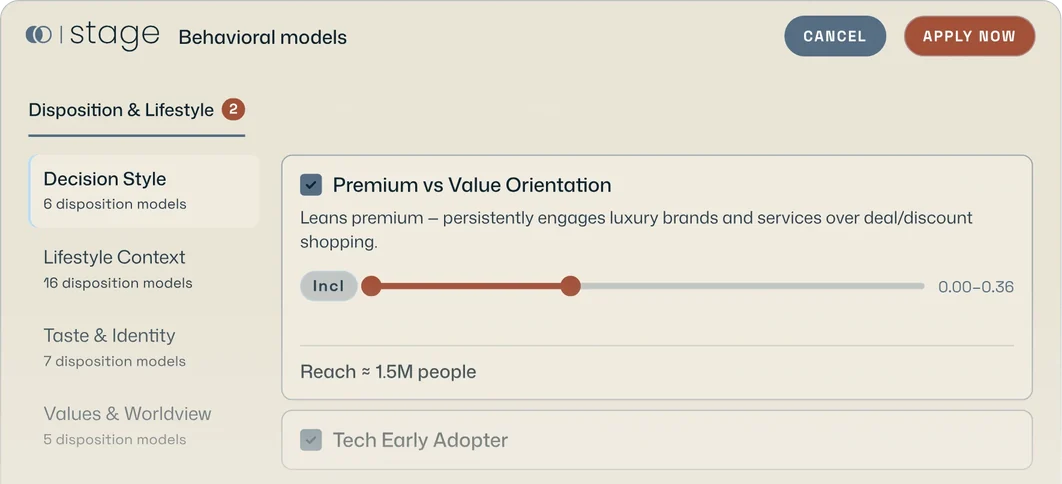
Describe the people you’re after in plain English. stage turns it into filters, sizes the pool against the full graph and shows the models that set it apart, the same day.
02 Build
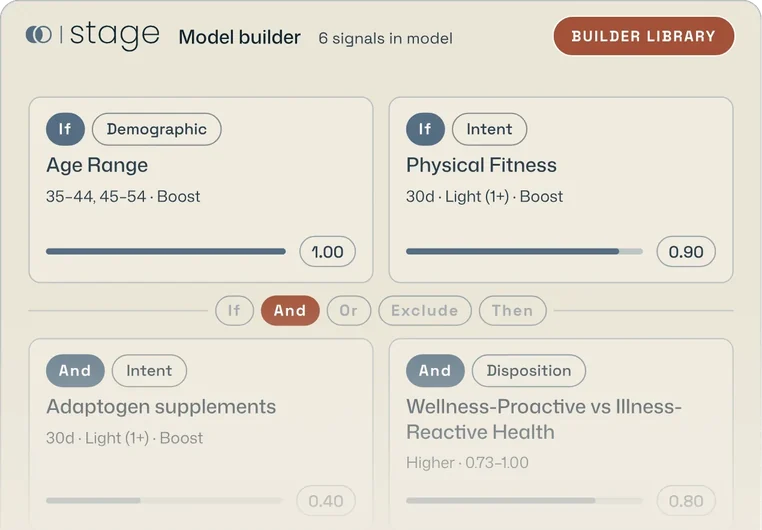
Build on motivation and decision style.
Drag models, segments and intent topics into logic groups. Model health tells you, before you publish, whether the audience is broad enough, sharp enough and backed by enough signals.
03 Read one person
Every score has a reason you can read.
Open any record to see what sets it apart from the audience around it. Identifiers stay masked in the workspace and leave only as hashes.
04 Apply
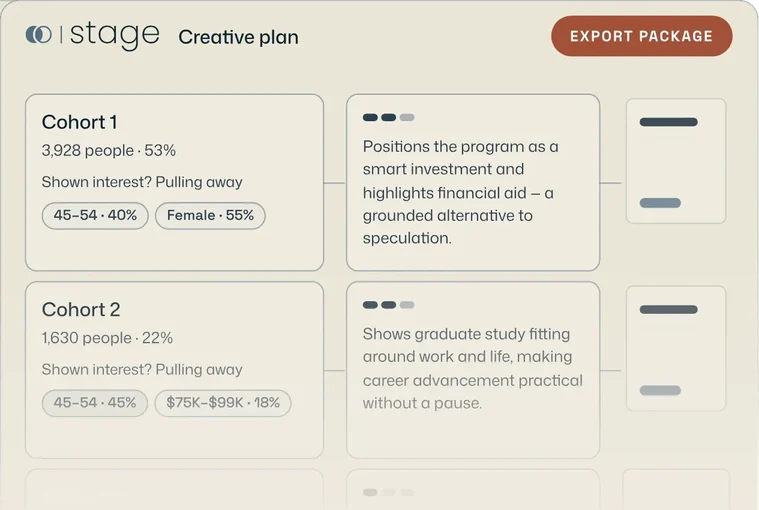
Turn each cohort into an angle your creative team can use.
The cohort engine splits an audience by why it would act. Each cohort gets an angle, the objection it has to answer, and creative made from the client’s own assets, matched by fit.
05 Activate
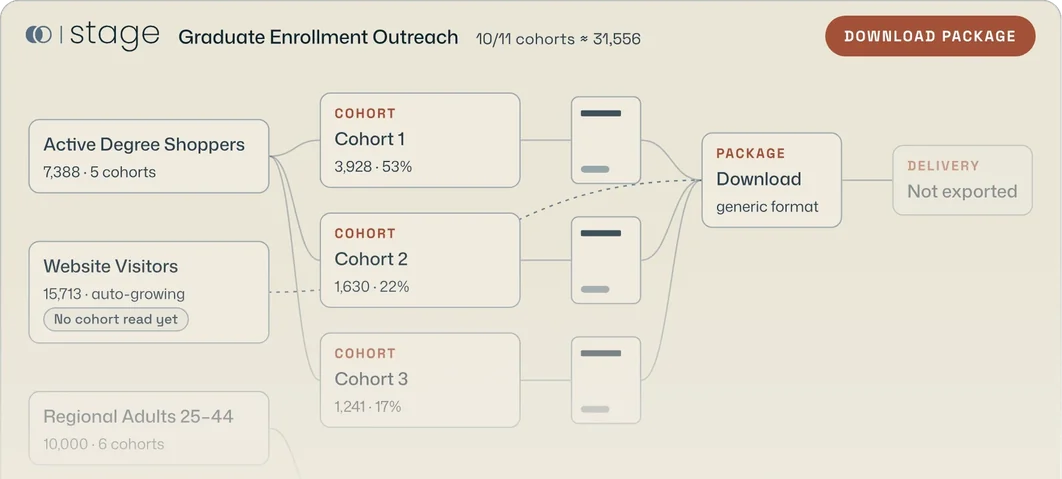
Package it for the channels you already buy.
Campaigns download as a package: one folder per cohort with hashed identifiers, formatted for Meta, Google, TikTok, LinkedIn or a DSP. Meta ad accounts connect directly.
06 Measure
Read the result against people you held back.
Bind an outcome, bring the evidence from your CRM or the site tag, and stage counts conversions against the holdout, week by week.
For agencies
Same seat, same segments as every rival shop. Procurement prices to match.
Your DSP seat and the client’s platforms report who saw the work and who clicked. They don’t say why the client’s customers buy or which message each group answers to, and few pods have a data-science bench to find out. With stage, your planners get a behavioral read on each client’s market from 17,000+ signals, with every client walled off from the rest and lift reported under your name.
- 01
Win the pitch with their customers
Size the prospect’s in-market pool from a plain-English brief and split it by why they’d buy, before you hold their data.
- 02
Put a reason behind every flight
Give every cohort a motivation, an objection and a creative angle, ready to drop into the media plan and the creative brief.
- 03
Report lift and price on it
Hold back part of every strike list and show the client’s finance team the outcomes the work added, under your agency’s name.
- Guardrail
Every client is an island: its files, audiences, models and results stay in its own workspace and never inform another client’s work.