Who we serve

Built for the teams who have to explain why the number moved.

Enterprise teams bring us the decision they own. Agencies bring us every client’s. Either way, the work begins with the same question: who could be moved, what would move them, and when.

7 markets, one question

Every market we serve asks the same three things.

What changes from one market to the next is the data you already hold and the rules you work under. Each section below sets out what that data tells you, what it can’t, and what Moonbrush adds.

  1. Who could be moved

    Not who fits a profile, but who is open to a decision right now, including people who aren’t in your file yet.

  2. What would move them

    The motivation and the hesitation behind the choice, so every group gets the message it answers to.

  3. When they’re ready

    The window in which the decision is actually being made, read from behavior that changes daily.

Pharma and healthDTC · HCP

Your deciles rank prescribers by volume. They don’t say what moves them.

Your NPI list, deciles and segmentation say who writes and how much, and your DTC data says who reached the savings page. Neither says why a segment moves, or when a patient-side conversation is opening. Moonbrush appends a behavioral read to the list you already run and reads treatment research and caregiving behavior across 270M+ U.S. adults, so every segment comes back with the message it answers to.

Usually throughatlas and stage

Where we start

  1. Give every decile a reason

    Match your NPI list as delivered and split prescribers into evidence-first, pathway-bound and delegating cohorts, appended beside the tiers you already run.

  2. Meet treatment research as it opens

    Read treatment-option, second-opinion and caregiving research daily, so early researchers get the discussion guide and caregivers sorting out coverage get copay support.

  3. Prove the launch wave on starts

    Hold back part of every strike list, return verified hub starts hashed, and read lift in aggregate against records you didn’t reach.

How you’ll know
NBRx in target segments and verified new starts, read against a holdout.
Guardrail
Audiences are built without PHI from research and caregiving behavior, no cohort label implies a condition, and every message hypothesis arrives ready for MLR review.

Every decile gets a reasonPrescriber segments come back with why they move and the message each one answers to.
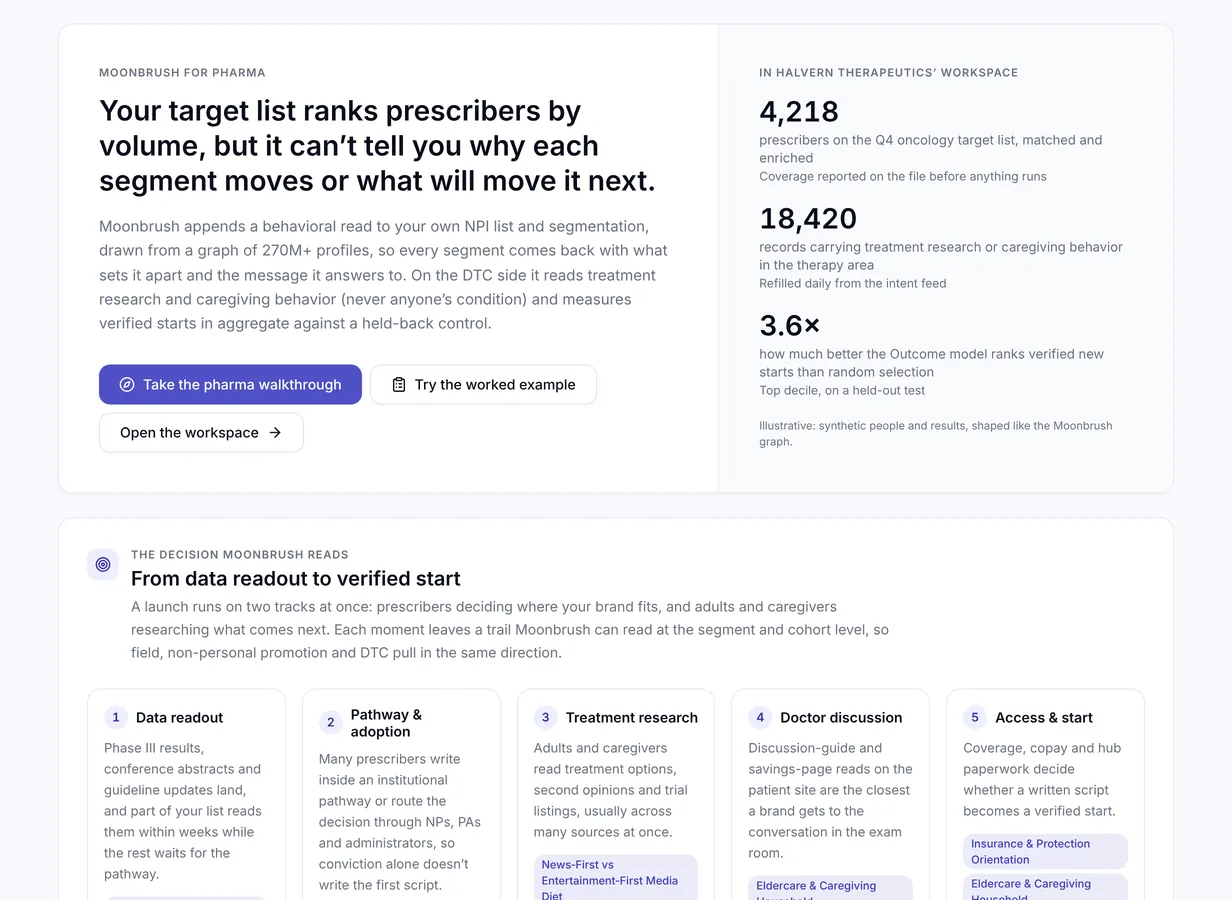
stage pharma playbook in a demo workspace: an oncology target list matched and enriched, and the five decision moments from data readout to verified start.
Demo workspace with synthetic people and results, shaped like the Moonbrush graph.

AgenciesStrategy · Media · Creative

Same seat, same segments as every rival shop. Procurement prices to match.

Your DSP seat and the client’s platforms report who saw the work and who clicked. They don’t say why the client’s customers buy or which message each group answers to, and few pods have a data-science bench to find out. With stage, your planners get a behavioral read on each client’s market from 17,000+ signals, with every client walled off from the rest and lift reported under your name.

Usually throughstage

Where we start

  1. Win the pitch with their customers

    Size the prospect’s in-market pool from a plain-English brief and split it by why they’d buy, before you hold their data.

  2. Put a reason behind every flight

    Give every cohort a motivation, an objection and a creative angle, ready to drop into the media plan and the creative brief.

  3. Report lift and price on it

    Hold back part of every strike list and show the client’s finance team the outcomes the work added, under your agency’s name.

How you’ll know
New-business win rate and client renewals, backed by lift against a holdout.
Guardrail
Every client is an island: its files, audiences, models and results stay in its own workspace and never inform another client’s work.

Every client walled offEach client’s files, audiences and results stay inside its own workspace.

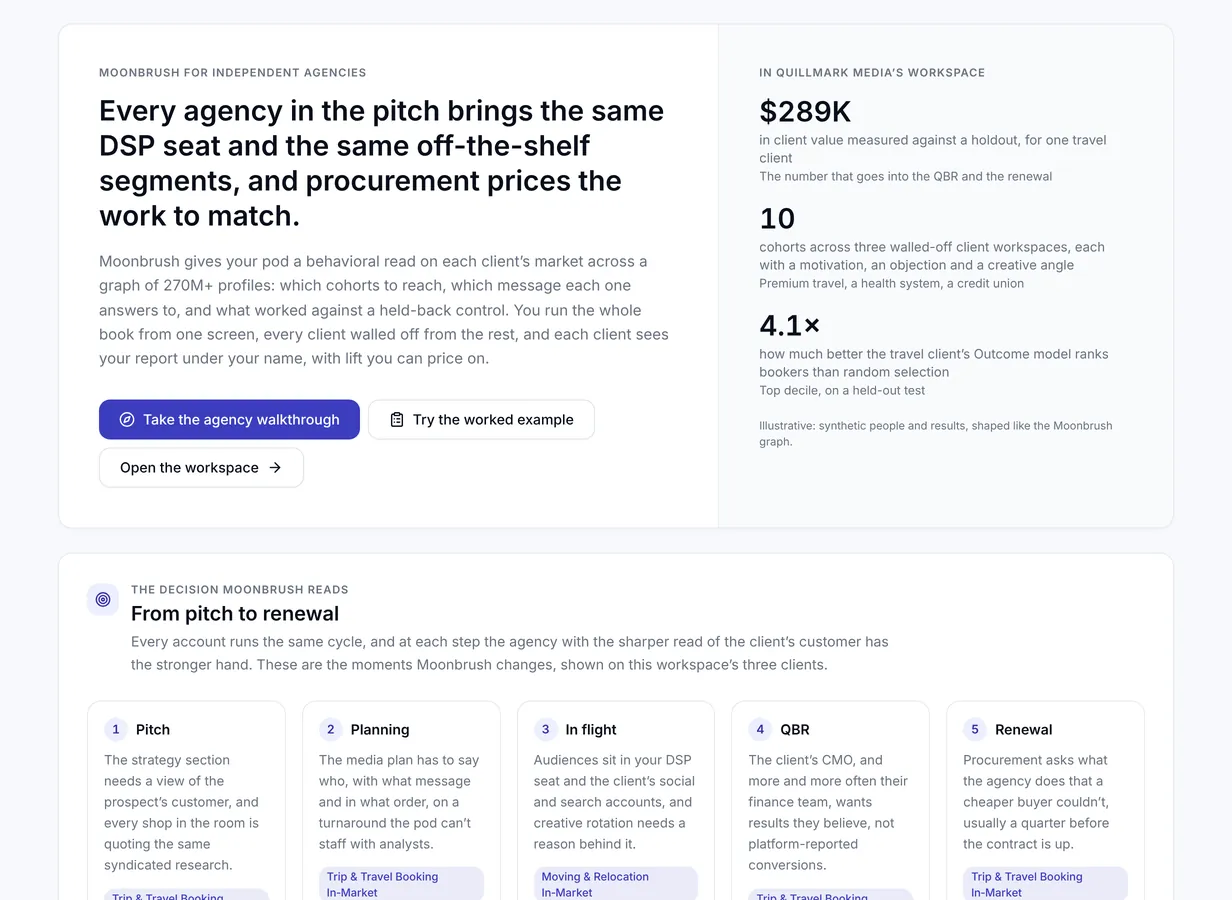
stage agency playbook in a demo workspace: three walled-off client workspaces and the account cycle from pitch to renewal.
Demo workspace with synthetic people and results, shaped like the Moonbrush graph.

Higher educationEnrollment · Adult · Online

Your next start is deciding now, weeks before the inquiry form.

Slate shows who inquired, applied and deposited, and purchased name lists show who fits a profile. What they can’t show is who is weighing a return right now, and what stalls them: cost, timing, or the fear that earned credits won’t count. Moonbrush reads the open search, the drive behind it and the capacity to follow through, and splits each pool by why it would enroll.

Usually throughatlas and stage

Where we start

  1. Reach stop-outs inside your footprint

    Find adults with credits and no credential by state and ZIP, then separate credential climbers from cost-first comparers who need aid answers.

  2. Work the inquiry pool by readiness

    Match your Slate export and split it into ready applicants, aid-first planners and those gone quiet, so counselors call the ready first.

  3. Reach them when they’re deciding

    Read when each cohort researches and applies, and move media and counselor outreach into those windows, away from the weekday-daytime default.

How you’ll know
Applications started and cost per application, read against a held-back control.
Guardrail
Scores guide marketing reach and timing only, never admission, financial aid or any eligibility decision, and modeled ethnicity is never selectable.

Financial servicesBanking · Lending · Insurance · Wealth

Households decide to switch, borrow or re-shop long before they tell you.

Core systems know balances, products and tenure, and prescreened lists show who qualifies on paper. What they miss is the episode that opens a decision: a move into your footprint, a remodel quote, a renewal worth re-shopping, a side business still banking as a consumer. Moonbrush reads those windows from 62.6B resolved behavioral events refreshed daily, so outreach lands while the decision is still open.

Usually throughatlas

Where we start

  1. Win primary checking from new movers

    Pick up households moving into your footprint from a daily feed, while the direct deposit is still up for grabs.

  2. See the business inside your base

    Spot consumer customers who have started paid work of their own, and offer business banking before the first invoice.

  3. Catch switching before it happens

    Flag the comparison and rate-shopping behavior that precedes a switch, and reach the customer while there’s still a decision to influence.

How you’ll know
New primary households, products per household and retained balances against a holdout.
Guardrail
Moonbrush scores never feed credit, underwriting, rating or eligibility decisions, and every list still clears your fair-lending and special ad category review.

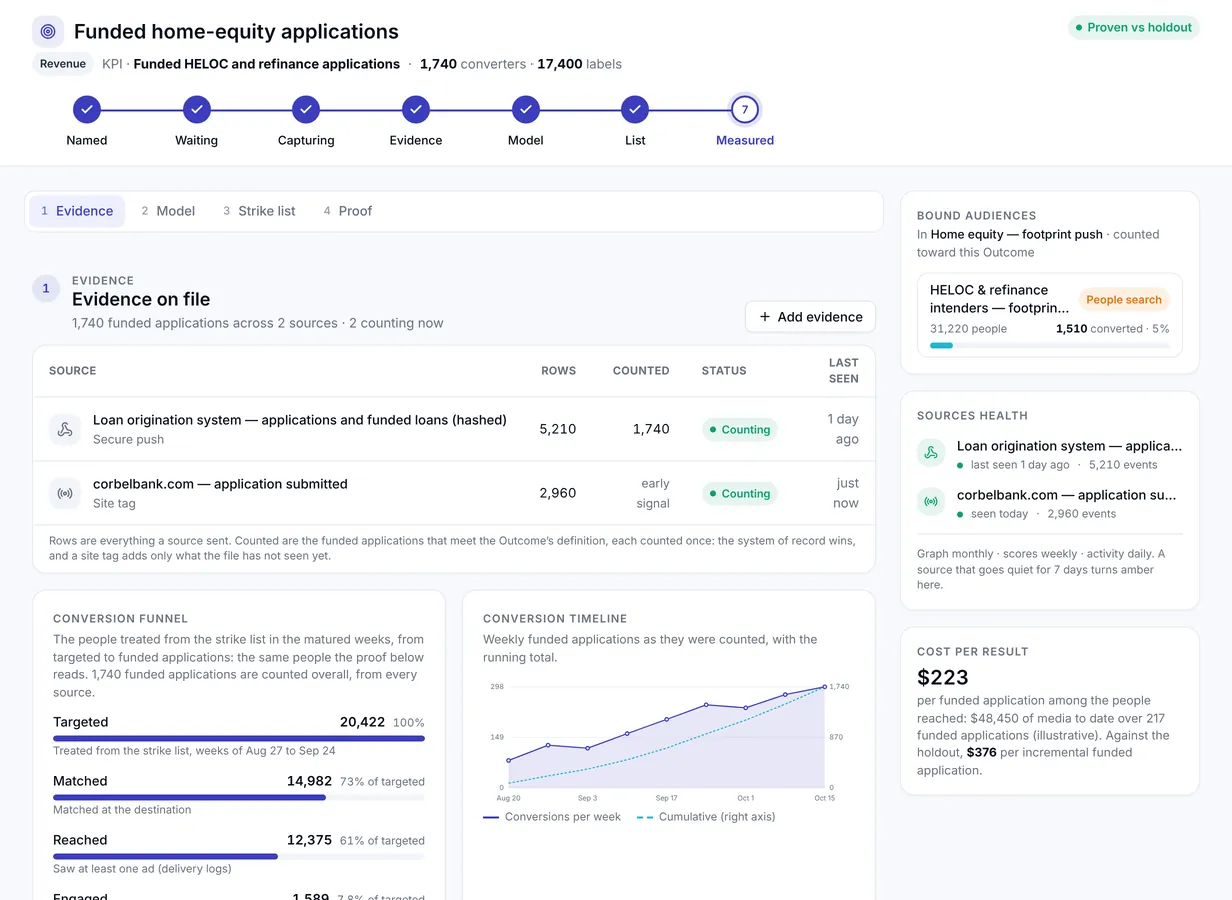
Counted from your recordsFunded applications come from your origination system and are read against a holdout.

Outcome screen in a demo workspace: funded home-equity applications counted from a loan origination system and a site tag, with a conversion funnel and weekly timeline.
Demo workspace with synthetic people and results, shaped like the Moonbrush graph.

Publishers and mediaSubscriptions · Audience revenue

Your next subscribers already read you. The meter is their only message.

Pageviews, registrations and your subscription platform record how often someone reads and when they cancelled. They can’t say what the reading is for (a dinner to cook, a project underway, a trip in planning) or what stops a regular from paying. Moonbrush reads the purpose behind the reading, drawing on 7,015 active consumer topics across 25 categories, so subscription offers, win-backs and the audiences you sell advertisers each carry a reason.

Usually throughatlas

Where we start

  1. Convert readers who already return

    Split engaged non-subscribers by what stops them paying: the meter, a single title, the price after the intro, or subscription fatigue.

  2. Win back by why they left

    Split your cancelled-subscriber file by why they left: price step-up, finished project or cutting back, each with its own return offer.

  3. Sell audiences with a reason attached

    Enrich your first-party reader segments with motivation and timing, then activate them hashed or inside a clean room for advertisers.

How you’ll know
Paid starts and win-backs against a holdout, and CPMs on enriched advertiser segments.
Guardrail
The site tag reads your consent manager and sends nothing without consent, and reader audiences leave only as hashed identifiers.

Retail and consumer brandsCPG · Grocery · Specialty retail

A promotion buys the first purchase. The household’s routine decides the second.

Loyalty files and order exports show who bought what and when, and syndicated panels describe the category. What’s missing is how a household lives and shops, and which episodes are open right now: a move, a remodel, a new school-year routine. Moonbrush adds that read to your own customer records and finds the same patterns across 270M+ U.S. adults, including households you don’t know yet.

Usually throughatlas and stage

Where we start

  1. Spend trial money where it fits

    Split launch audiences by occasion and need state, and flag the value-first stockers a coupon only rents for a week.

  2. Turn trial into repeat

    Split your loyalty file into repeaters, one-and-done triers and category regulars new to the brand, each with its own reason to return.

  3. Reach movers around every store

    Find households inside a move or remodel within each store’s trade area, before they ever search your name.

How you’ll know
Incremental trial, repeat rate and cost per order, read against a holdout.
Guardrail
Purchase data comes only from the loyalty, order or partner files you’re entitled to share, hashed before upload, and never crosses to another client.

Nonprofits and institutionsFundraising · Membership

Your next donor is reading about your cause. Rented lists arrive late.

Your CRM shows who gave, how much and when, and rented or exchanged lists reach people already giving somewhere else. Neither shows who is following your cause right now, or what keeps a one-time giver from going monthly and a lapsed member from renewing. Moonbrush reads giving habits and cause research across 270M+ U.S. adults and splits each pool by what moves people to give.

Usually throughstage

Where we start

  1. Find donors already in the cause

    Reach people with a giving habit and open cause research, and show the doubters where the money goes before you ask.

  2. Turn single gifts into monthly giving

    Split last year’s one-time donors by why they gave once, so emergency-appeal givers and set-and-forget planners get the monthly ask that fits.

  3. Renew lapsed donors and members

    Read what changed since the last gift or renewal, so the still-engaged hear what they started and movers get their local chapter.

How you’ll know
Cost per first gift, monthly conversions and lapsed donors renewed, against a holdout.
Guardrail
Audiences select on cause affinity and giving behavior, never on income, net worth, faith or an estimated capacity to give.

Not on the list?

The question usually is.

Beyond agencies, we work in 6 industries today. If your team owns a decision where people have to choose, and you can measure whether they did, we can scope it.

Tell us the decision

Cookie settings

Strictly necessary

Strictly necessary

Remembers your choices and keeps the site secure. Always on.

Always on
Analytics

Analytics

Google Analytics 4, with Google signals and ad personalization off. Tells us which pages people find useful.

Marketing

Marketing

HubSpot tracking. Connects a form you submit to the visits before it, so our team has context when we reply.

Cookie settings cover this website. To opt out of the sale and sharing of information about you in Moonbrush’s data products, use Your Privacy Choices.